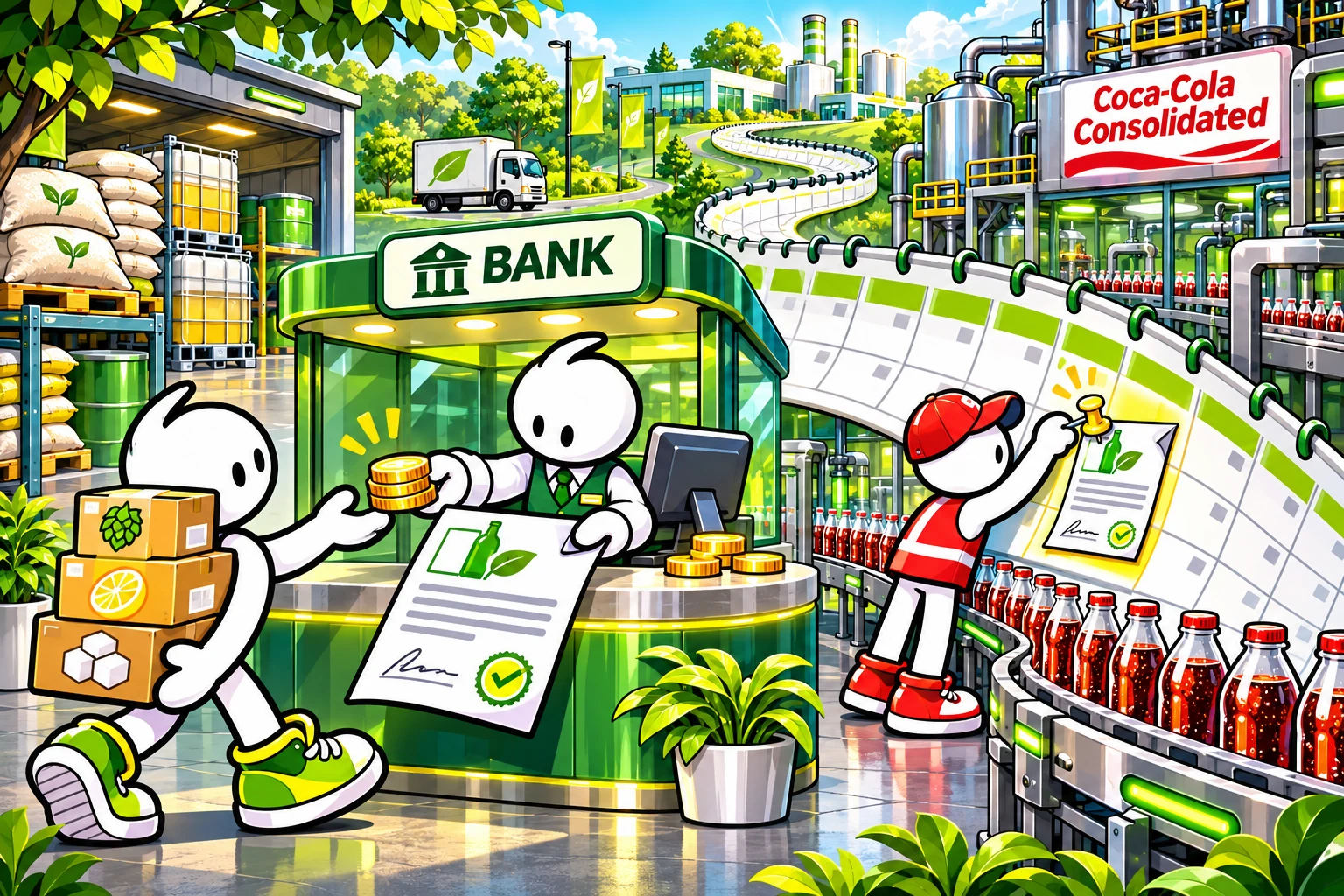
Three parties, two clocks
Coca-Cola Consolidated discloses 90-day terms for most suppliers. Program participants can sell selected invoices to a financial institution and negotiate fees directly. The buyer’s amounts and payment dates remain unchanged. Outstanding confirmed program obligations were $93 million on October 2, versus $66.6 million at year-end 2025.
Our analysis starts with the calendar. For buyer and supplier, the same delivery can end on different dates. Accepted goods may already be productive while the supplier needs cash to make the next batch. A financial institution can bridge that gap through a further transaction. The question is what it costs to turn the right to receive money into cash in the bank.
The factual basis appears at the start. We then examine incentives, risks and possible actions. Examples do not describe these companies’ undisclosed contract provisions.
The product price and the price of waiting
A product negotiation usually compares commercial prices for the same goods. Financing introduces another layer, the price of accessing earned revenue. A product discount might reward volume, assortment or a longer relationship. An early-payment discount purchases a particular number of days. Combining them into one number makes it harder for sales teams to see how much margin covers production and how much funds the customer.
Separating the product price, contractual payment date and acceleration charge enables a like-for-like comparison. It also helps establish whether a longer payment term has improved or weakened the economics of supplying an account.
The cost of “only 1.2 percent”
An editorial model, not Coca-Cola Consolidated’s terms. Assume a supplier is owed $100,000 on day 90. It is offered $98,800 on day 30, a $1,200 deduction in exchange for 60 days. The charge relative to cash actually received is $1,200 / $98,800, approximately 1.21% for the period. A simple annualised comparison gives approximately 7.39%: $1,200 / $98,800 × 365 / 60.
This comparison excludes compounding, additional fees and taxes. A credit line might cost less but require collateral or consume scarce borrowing capacity. The decision also depends on what the business can do with cash during those 60 days. Compare net proceeds, duration and the complete expense.
When does the useful clock start?
An attractive rate cannot rescue an invoice still awaiting approval. Between dispatch and confirmation, a supplier may encounter quantity reconciliation, acceptance documents, quality checks, corrected bank details or a disputed discount. These are possible stages in an ordinary supply process, not an established description of this company’s workflow.
The supplier therefore needs another measure, the time from dispatch until an invoice becomes eligible for finance. Shortening that interval may matter more than negotiating a small fee reduction. Buyers have a task here too, making invoice status and exception ownership visible. Otherwise an offer of faster cash depends on an opaque approval queue.
Where does a disputed invoice leave the supplier?
Selling a receivable changes the route money takes. The documents determine who bears losses after non-payment, a product return or a later adjustment. Those conditions are undisclosed here. The seller’s remaining exposure cannot be inferred simply from participation in financing.
A negotiating team should establish recourse, deductions, returns and the limits of supplier warranties. The cause of non-payment matters: buyer insolvency, a quality dispute and an incorrect document can create different obligations. Finance and sales need to read the same process because a disagreement about a delivery can change the outcome of the financing transaction.
A choice that can be examined
An economic choice needs comparable alternatives. That means a transparent acceleration price, a route to leave some invoices until maturity and clarity about the consequences of declining. If the supplier routinely relies on early cash, the charge becomes a recurring component of serving the account.
Long terms may improve a large buyer’s working capital, but somebody still funds the chain. If funding is expensive for a supplier, it may enter the next price negotiation or affect inventory held for the customer. Some of the buyer’s immediate benefit can return through product prices, availability or the next agreement. These are mechanisms to investigate, not outcomes demonstrated by this filing.
What the balance can actually tell us
The disclosed number describes obligations outstanding at two dates. It cannot establish early-payment volume, days gained or participant savings. The program predates this report.
Assessing the result needs approval time, invoice selection, average acceleration, complete fees and dispute frequency. These measures belong together. Greater financing volume might reflect convenient access to cash or growing dependence on a long payment term. Following one actual batch from purchase order through final settlement helps distinguish the two.
Coca-Cola Consolidated is a US beverage bottler and distributor, a separate company from The Coca-Cola Company. The programme balance does not measure supplier savings. The 7.39% model is hypothetical; actual programme fees are unknown.