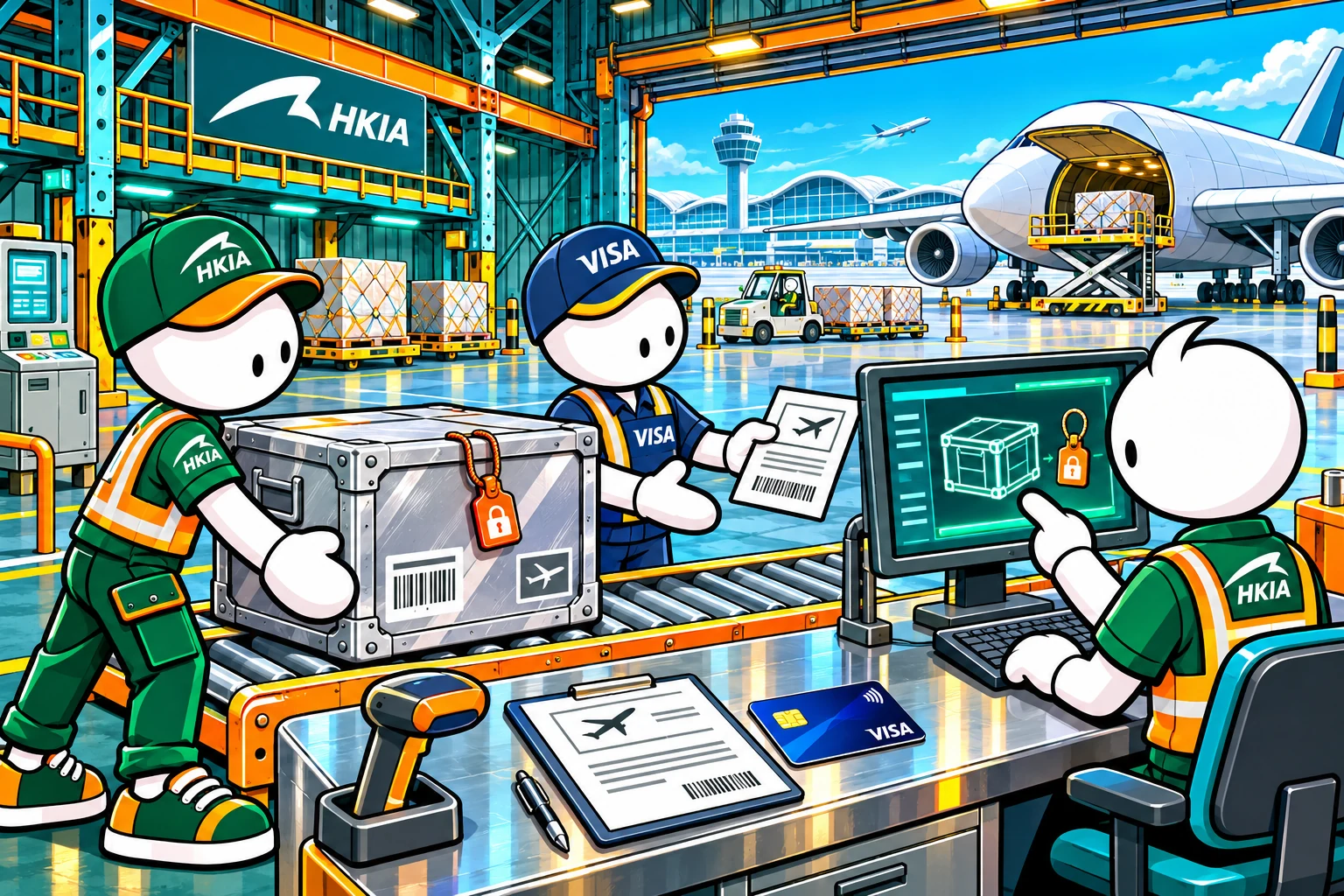
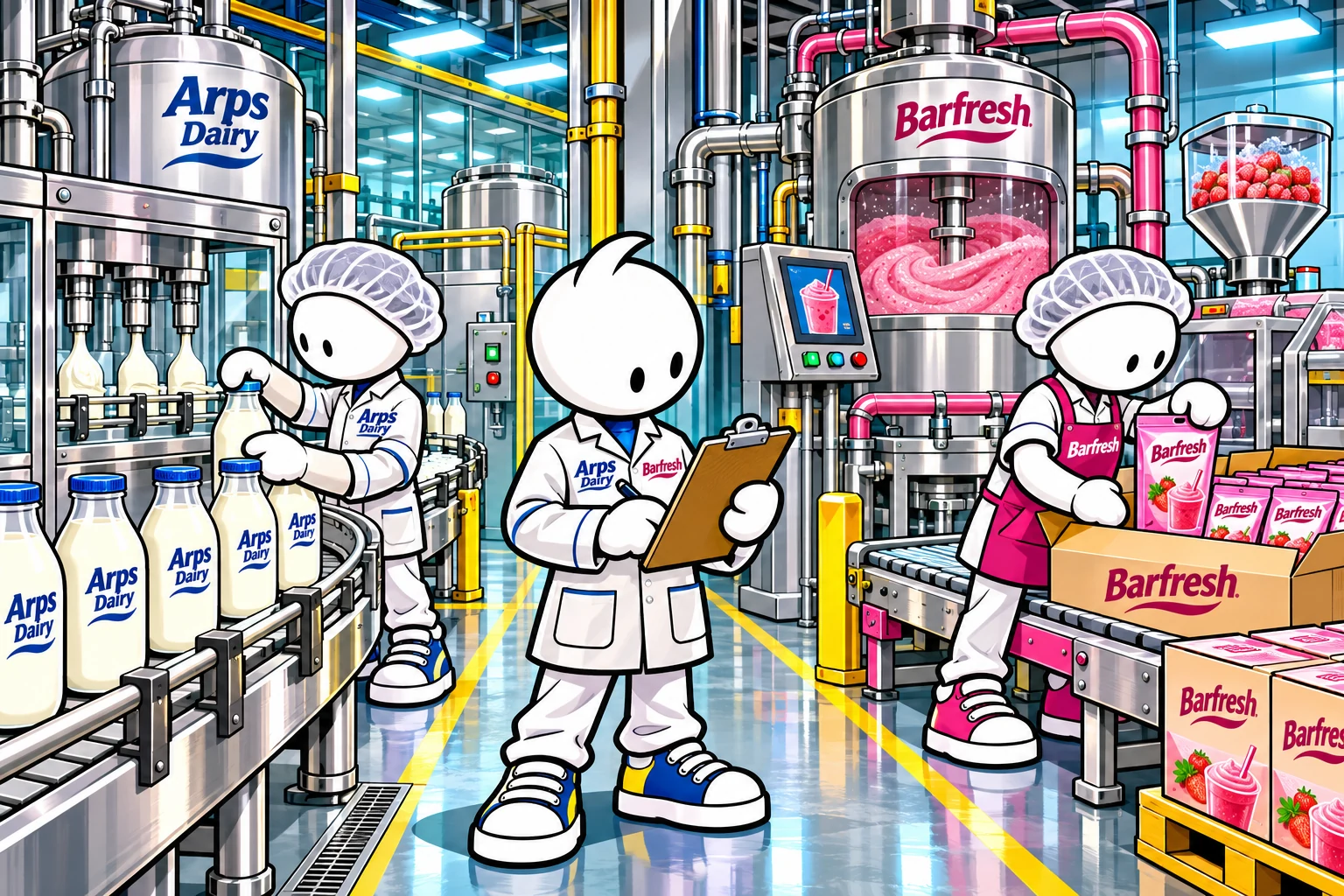
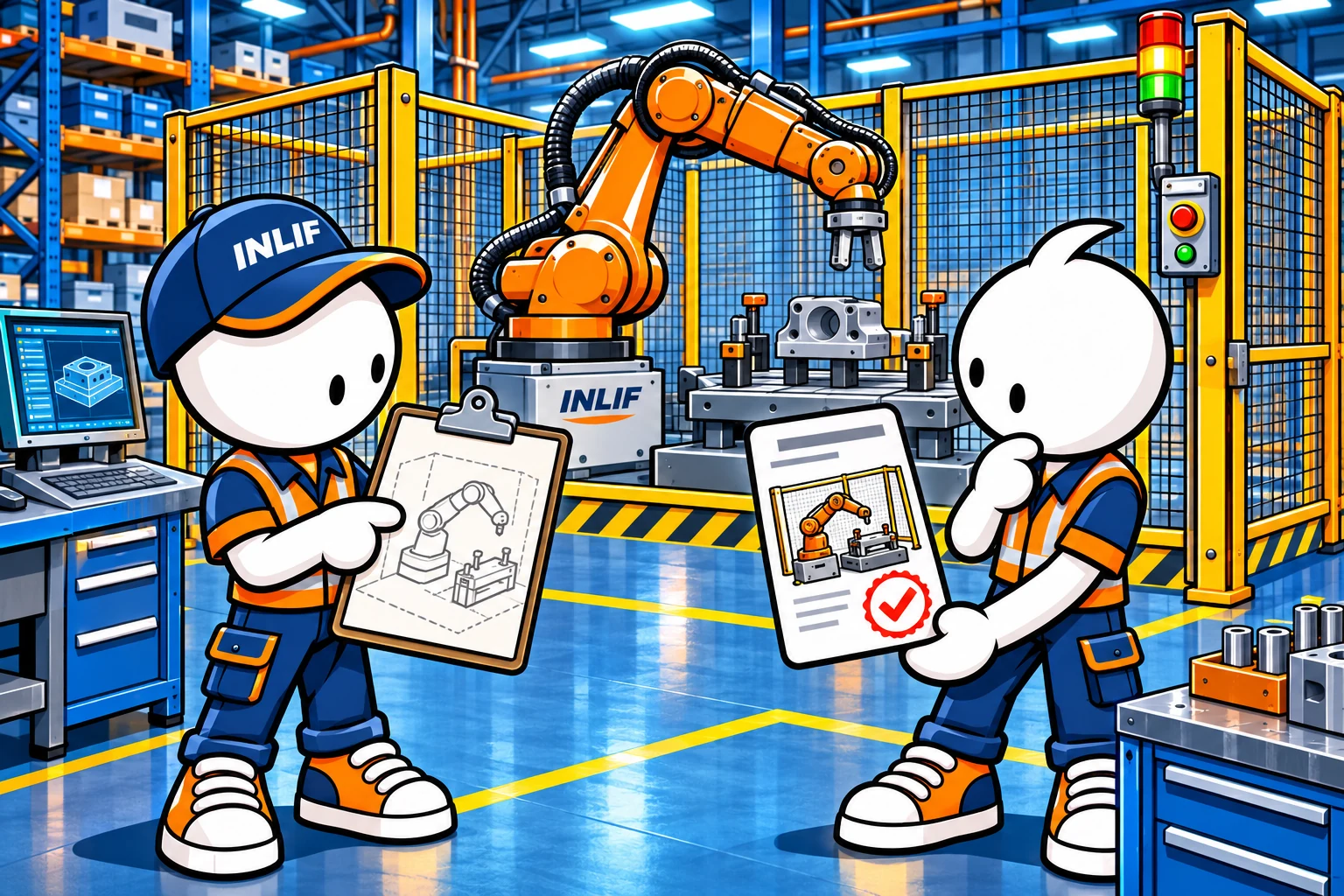
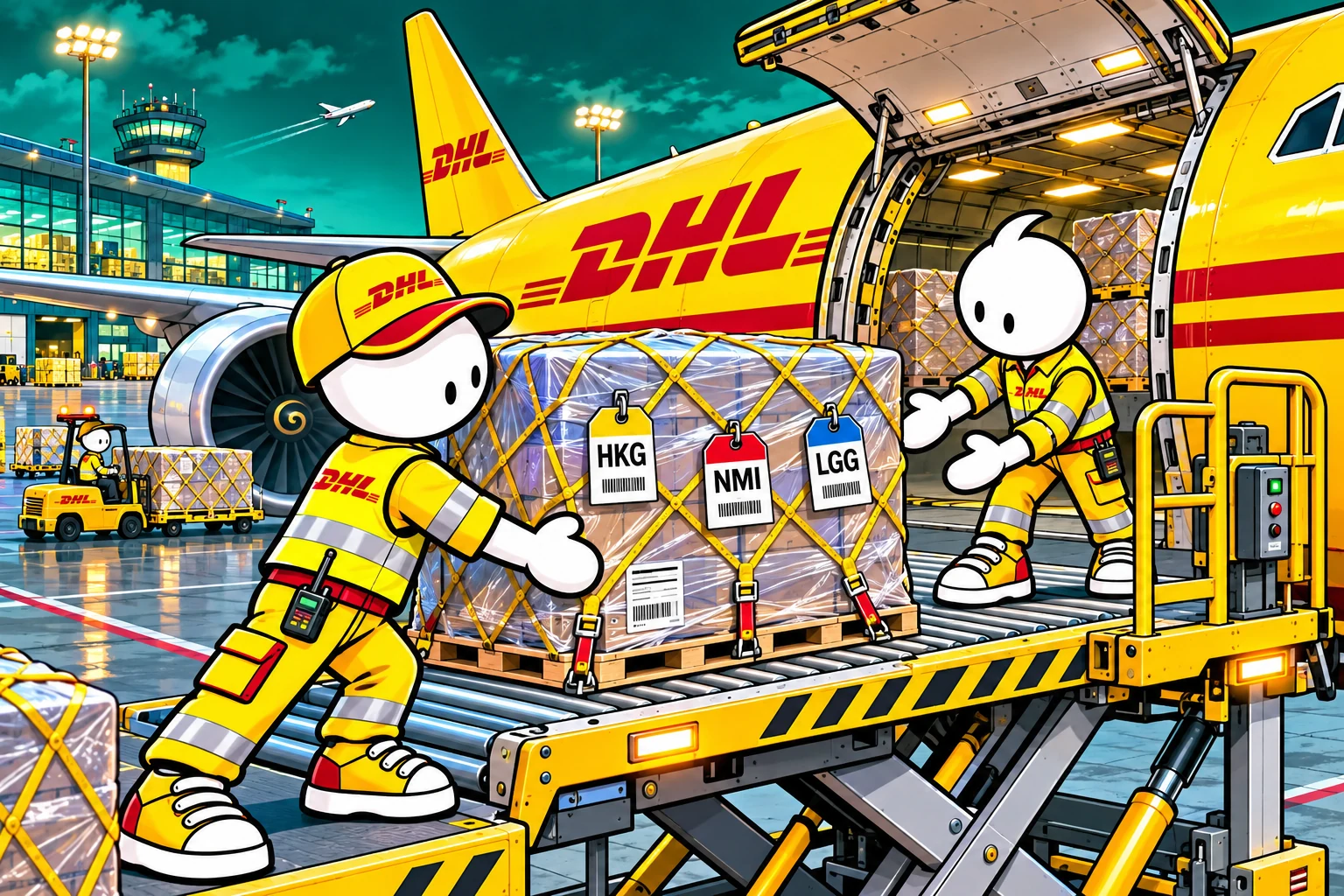
An editorial metaphor for production and the wait for payment, not a record of the actual site or participants.
Who pays for the wait?
A large order connects several decisions: what to make, when to hand over the result and how to fund the work before settlement. This issue examines how commercial terms change a company’s ability to deliver.
Seojeon shows the cash commitment behind supply without an advance. Visa and Hong Kong’s airport propose separate payer and recipient timelines. NVIDIA helps create future supplier capacity. These models need different calculations but return to one question: which obligations can a business fulfil?
Other features examine Barfresh’s return to customer menus, INLIF’s documents and the boundaries of Velo3D’s production sample. After the News follows Firefly and AST from Issue 02. Thirteen briefs, four tools and three learning resources broaden the week’s coverage; The Procurement Game Plan brings the buyer’s view of selection into the discussion.
Facts and editorial models are marked separately. The tools have not undergone our hands-on testing, and historical learning resources are dated. Every section is available in Russian and English; we conducted no original interviews for this issue.
01The Big Read · Deal Terms
Seojeon Electric Machinery × Hyundai Engineering & Construction · South Korea · November 20, 2026
Order won. Cash later.
Winning an equipment contract comes before manufacturing, delivery and payment. How payment terms become a working-capital requirement.
Editorial illustration. The module is due in December 2026; achieved benefits have not been established.
03The weak link
Barfresh × Arps Dairy · United States · November 16, 2026 · Q3 results
Winning back a place on the menu
Barfresh’s revenue grew after acquiring a milk business. Its established products face a separate task: turning production readiness into repeat purchasing.
Editorial illustration. Financial figures cover the quarter ended September 30, 2026.
04How they sell
INLIF / Ewatt · China · November 18–20, 2026
When a framework becomes an order
Agreements backed by advances and non-binding plans support different spending decisions. INLIF illustrates the transition from channel interest to authorising production.
Editorial illustration. A conceptual scene, not a depiction of the actual facilities.
05Under the magnifying glass
Velo3D × PanOptimization · United States · November 19, 2026
What an accepted part costs
Twelve builds provide evidence for a process discussion. The buyer still needs to establish how closely the sample matches its order and which costs belong to the accepted outcome.
Thirteen short stories from the week: production and components, trade and ingredients, routes and payments. The illustrations are invented editorial scenes, not documentation of actual sites or participants’ actions.
Scana / PSW × Tydal · Norway · November 20, 2026
From framework to call-off
PSW received a call-off under its Tydal framework for 240 MW of frequency-converter and transformer skids. Scana places it in the NOK 75–150 million category; deliveries are planned from Q1 2027.
Our analysis. For a comparable framework, distinguish the customer’s forecast from the volume, dates and amendment terms of a specific call-off. Confirmed batches can inform material and assembly reservations; preparing for further call-offs requires a separate inventory and capacity decision.
Advance payments, cancellation and acceptance terms are undisclosed. MW is not battery energy capacity; an order is not recognised revenue.
Innomet × Hindustan Aeronautics · India · November 20, 2026
Innomet: an order with a reference
Innomet disclosed a Hindustan Aeronautics order for Weight Tungsten and Tuning Mass items, worth INR 17.31 million including GST. The filing identifies the order and receipt time; specifications and delivery timing are not publicly detailed.
Our analysis. Before releasing a comparable batch, link the purchase-order reference to the agreed drawing revision, inspection requirements and dispatch documents. That check aligns what sales has accepted with what production and quality are preparing to deliver.
The source does not establish a first order, export sale or completed delivery.
First Graphene × UNITEX · Australia / China · November 16, 2026
A partner for material qualification
First Graphene and UNITEX signed a three-year agreement to develop graphene-enhanced composites. Customer validation and scale-up depend on results and agreed commercial terms. Either party may cancel with three months' notice.
Our analysis. For this kind of project, allocate sample, testing and scale-up costs, establish ownership of results and define the gate to a commercial batch. Compare those commitments with the qualification timetable, especially where termination requires three months’ notice.
The original ASX publication was November 16; Newsfile repeated it on November 18. Prices, volumes and costs are undisclosed.
DHL Global Forwarding · Germany / Hong Kong / India / Belgium · November 16, 2026
How much capacity reaches India?
DHL announced a twice-weekly dedicated Hong Kong–Navi Mumbai–Liège service. The Boeing 747 has about 100 tonnes of capacity; the initial target for India sectors is 25–30 tonnes per flight.
Our analysis. Specify the leg, shipping week and batch size in a freight request, then compare confirmed space with the required departure date. This bases route planning on available capacity and bookability, while total aircraft capacity remains a reference characteristic.
Achieved load factors, rates and reliability are undisclosed. A Bengaluru–Europe addition in March 2027 remains a plan.
Hormel Foods × Brakebush · United States · November 16, 2026
Buying capacity and customer relationships
Hormel completed its approximately $1.055 billion purchase of Brakebush. An 8-K reports a $700 million borrowing to fund part of the price and related expenses; the acquisition adds foodservice relationships and a direct sales organisation alongside production.
Our analysis. Track retention of Brakebush customers and sales through the acquired sales organisation separately. That would distinguish turnover added by the acquisition from the effects of a combined offer, and show how purchased foodservice access develops after closing.
November 16 is the closing event; the first announcement was September 30. Expected integration benefits are not automatically achieved results.
ITM and Canadian contract manufacturer AtomVie announced an agreement for non-carrier-added lutetium-177 to support AtomVie’s work with radiopharmaceutical companies.
Our analysis. A contract-manufacturing customer should ask how scarce critical material would be allocated across programmes. Comparing providers can include priority rules, supply reserves and responsibility for a shifted production slot. These are verification questions, not disclosed ITM–AtomVie terms.
Price, volumes, duration and the first shipment are undisclosed. The stated reliability is not backed by published delivery-performance data.
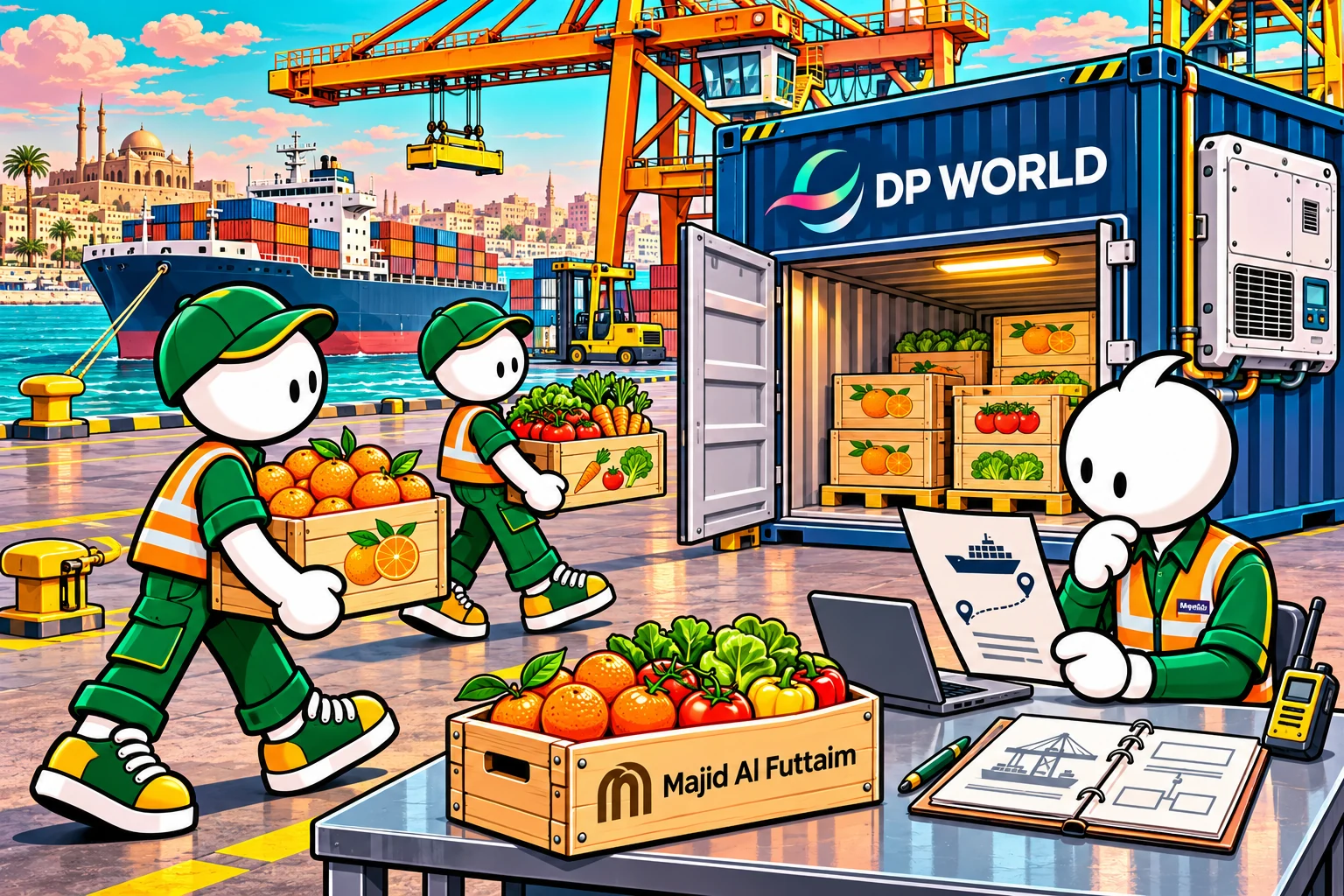
Majid Al Futtaim × DP World · Egypt → UAE · November 16, 2026
Egyptian produce: a route to the shelf
Majid Al Futtaim and DP World signed an MoU for an Egypt-to-UAE export corridor, initially for fresh fruit and vegetables. It combines the retailer’s supply network and demand with consolidation, cold-chain logistics, customs and distribution.
Our analysis. A producer can cost one batch through buyer acceptance: collection, consolidation, cold-chain handling, transport, inspection and possible spoilage. That calculation would show which price and minimum lot make the route viable, and where costs fall after a temperature breach.
This is an MoU, not a confirmed shipment. Volumes, rates, minimum lots and the first dispatch date are undisclosed.
Metso × Troilus · Finland / Canada · November 17, 2026
Selecting equipment for start-up
Metso announced an equipment order for Troilus’ gold-copper project in Québec worth approximately €57 million, booked in fourth-quarter orders. Selection also considered commissioning, ramp-up and service capabilities. The parties are still planning a broader service framework.
Our analysis. Compare industrial offers by responsibility boundary: equipment, interfaces, commissioning, training and spare parts. This makes each bidder’s included scope visible and identifies the additional budget needed to obtain an operating line.
Payment and delivery schedules are undisclosed. Risk reduction is the participants’ expectation; an order does not establish delivery or revenue.
Paratus announced that Seagems had won a Petrobras contract through competitive tender, expected to add approximately $410 million to the JV’s backlog. Four-year operations are expected to start in Q4 2028 using the third-party vessel Seagems Safira, currently under construction. Paratus owns 50% of the JV.
Our analysis. For a comparable service, align construction, vessel access, mobilisation and operations in one schedule. Then examine a delay in one link: which costs continue, who pays and when obligations can be amended or ended. This exposes the cost of reliance on a third-party asset.
Advance payments, cancellation rights, vessel arrangements and delay compensation are undisclosed. Expected backlog is not realised revenue.
NVIDIA × Kinsus / SPIL · US / Taiwan · November 17, 2026
The buyer funds future capacity
NVIDIA announced new multiyear supplier arrangements. Kinsus plans to expand ABF substrate capacity dedicated to NVIDIA by more than 3.5 times, targeting the additional capacity for Q3 2028. A separate SPIL advanced-packaging expansion is supported by multibillion-dollar NVIDIA funding, with increased dedicated capacity targeted by mid-2029.
Our analysis. A supplier should compare expansion support with future purchasing commitments: volume, duration and the buyer’s right to revise its forecast. That determines how much capital expenditure and unused capacity the supplier may have to fund if demand falls short.
Expansion is unfinished. Financing structure, prices, cancellation and risk allocation are undisclosed. The release distinguishes earlier agreements from new ones.
Bunge × Bangkok Produce / CP Vietnam · Brazil / Argentina → Vietnam · November 17, 2026
Two soy routes to Vietnam
Bunge and Bangkok Produce are extending their soy traceability programme to Vietnam. Two routes are envisaged: Argentine soybean meal directly to CP Vietnam, and Brazilian beans through processor VAL, with the resulting meal supplied to CP feed operations. Documentation and digital traceability are intended to follow origin and processing.
Our analysis. Compare the document chain from raw-material origin to the buyer’s meal batch on each route. Processing is the key difference: establish how input lots connect to output, who substantiates the transformation and who resolves gaps in the data.
This extends an existing programme. Volumes, prices, first-delivery dates and independent verification of data completeness are undisclosed.
Mastercard and areeba announced the Mastercard Wholesale Program for Lebanon’s travel industry, with areeba as the issuing partner. The programme is intended for digital B2B payments by travel companies to suppliers, including virtual-card use.
Our analysis. A travel intermediary can compare the full settlement economics of one booking: customer-receipt date, supplier-payment date, fees and cancellation refunds. The same payment channel can affect margin and working-capital needs differently.
Pricing, credit terms, individual supplier onboarding and achieved savings are undisclosed. The original release is dated November 18; November 19 republications are not another launch.
DP World · Mozambique / UAE · November 18, 2026, 12:53 Europe/Amsterdam
Maputo raises its capacity target
DP World raised its announced investment in expanding Maputo’s container terminal from $165 million to $200 million. The revised target is 650,000 TEU annually by Q2 2027, against current capacity of 225,000 and the previous target of 530,000.
Our analysis. A cargo owner can compare routes using the full cost and timetable of one shipment: sailing schedule, port handling and inland transport. Terminal expansion changes the route decision when those links fit the lot size and the customer’s deadline.
650,000 TEU is future capacity, not actual throughput. Rates, utilisation and demonstrated time savings are undisclosed. $200 million is the revised total, not an addition to $165 million.
AST SpaceMobile × Firefly Aerospace · United States · November 17, 2026 · Following up Issue 02
Shares for a licence: what changed
Following up Issue 02. An initial 10 million shares now have a separate disclosure; we connect Firefly’s consideration with AST’s task of establishing production.
An editorial metaphor. The folder and certificate handover do not document the parties’ actual actions.
The Workbench: four tasks
Travel, cargo handover, contract billing and channel control. We examine each announcement through the operation it proposes to change and select a distinct verification scenario. Our team has not tested these tools. Illustrations are editorial metaphors rather than interface screenshots.
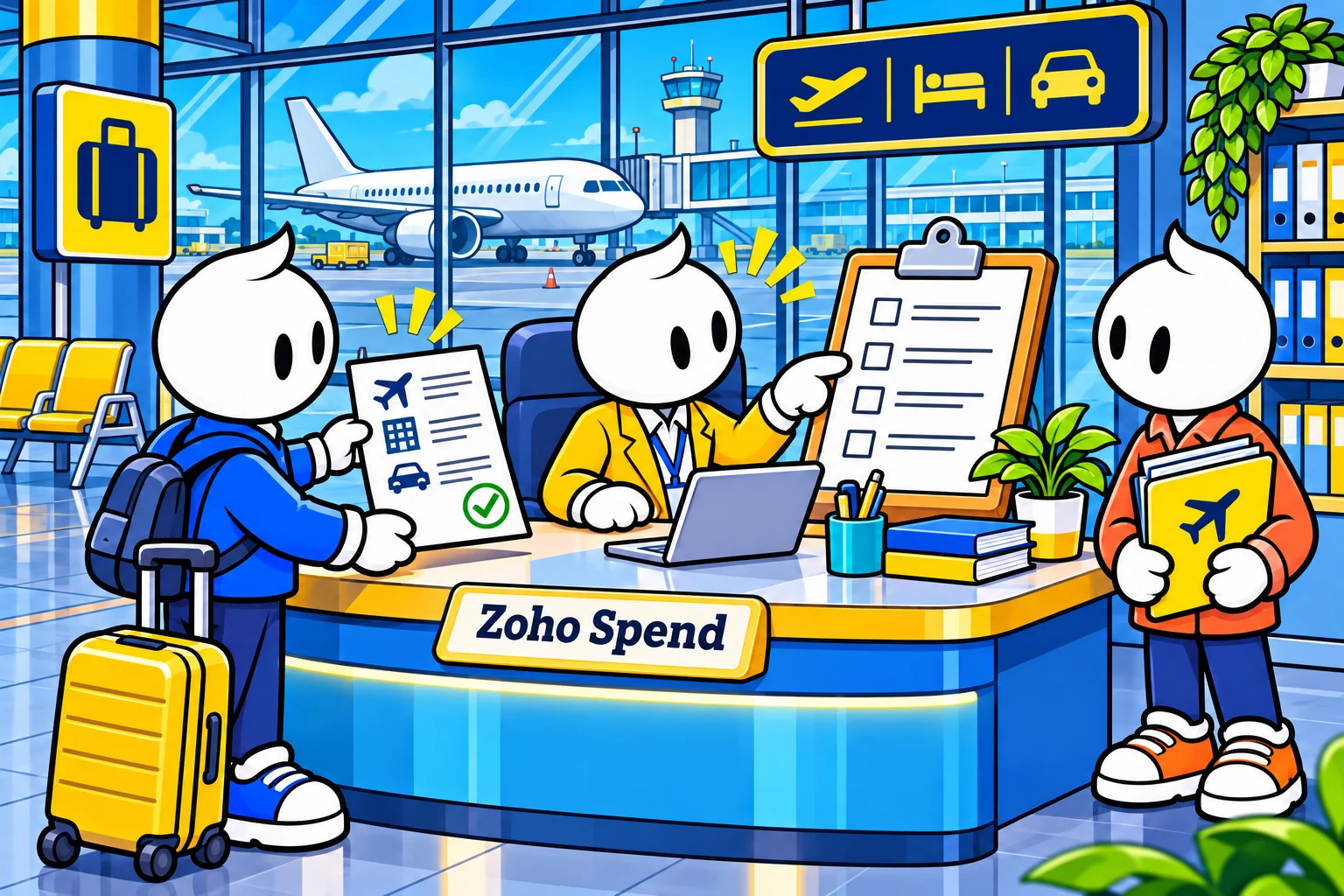
Zoho Spend · US launch · November 19, 2026
Budget before booking
Available according to the company · Not tested
Zoho added flight, hotel and ground-transport booking to Spend. The announcement concerns the United States: negotiated fares appear at booking, exceptions go for approval before confirmation, and bookings flow into expense reports. The add-on is said to be available immediately at $9.99 per trip; that is not the entire platform’s price.
Our analysis: approval timing changes how spending is controlled. Establish who may authorise an exception before a ticket is bought and which budget it consumes. Compare the system’s approval path with the actual roles of sales, finance and the travel organiser.
Verification scenario. A synthetic trip that exceeds policy and is later cancelled. Follow approval, refund or unused ticket treatment, then reconcile the final expense with accounting. This would reveal the manual work remaining between booking and closing the trip.
We tested neither booking nor integrations. Availability and payment for organisations outside the announced market have not been established.
Shippeo · France / international transport · November 18–19, 2026
Cargo and paperwork in one workflow
Platform expansion announced · Not tested
Shippeo introduced Connected Solutions and an evolution of eCMR, linking consignment notes, signatures and proof of handover to the transport journey. The page is dated November 18; the release dateline is November 19. The portfolio covers orders, execution, costs and documents.
Our analysis: a connected document can prove useful when a discrepancy occurs. Receiver, carrier and payer need a shared event, its participants and exceptions, with an amendment history. Identify which record supports reconciliation and who may clarify it when assessing a solution.
Verification scenario. One shipment with a receiving exception and a temporary loss of connectivity. Follow creation, challenge and correction of the record, then its transfer to ERP. Recognition of the chosen electronic document on the particular route is a separate check.
The release does not disclose pricing, complete module availability or all supported jurisdictions. We did not test electronic signatures or document exchange.
Chargebee Arc · International announcement · November 18, 2026, 10:50 ET
From contract to billing
Early access open · Not tested
Chargebee opened early access to Arc. According to the company, it extracts terms from signed contracts, proposes billing configurations and links fields to their sources; other workflows cover receivables and revenue recognition. Proposed actions are presented for human review.
Our analysis: a useful outcome is a decision queue for finance: which terms are substantiated, where they conflict and who must resolve the conflict. Assess the manual review needed for correct billing configuration and how the basis for each correction is retained.
Verification scenario. A synthetic contract with stepped pricing, an amendment and conflicting payment dates. Compare the proposed configuration with a prepared reference answer, checking links to terms and the handoff of ambiguity to a person.
Early access does not establish a mature, generally available product. Pricing, geographical restrictions and achieved accuracy are undisclosed in the release. We uploaded no contracts to Arc.
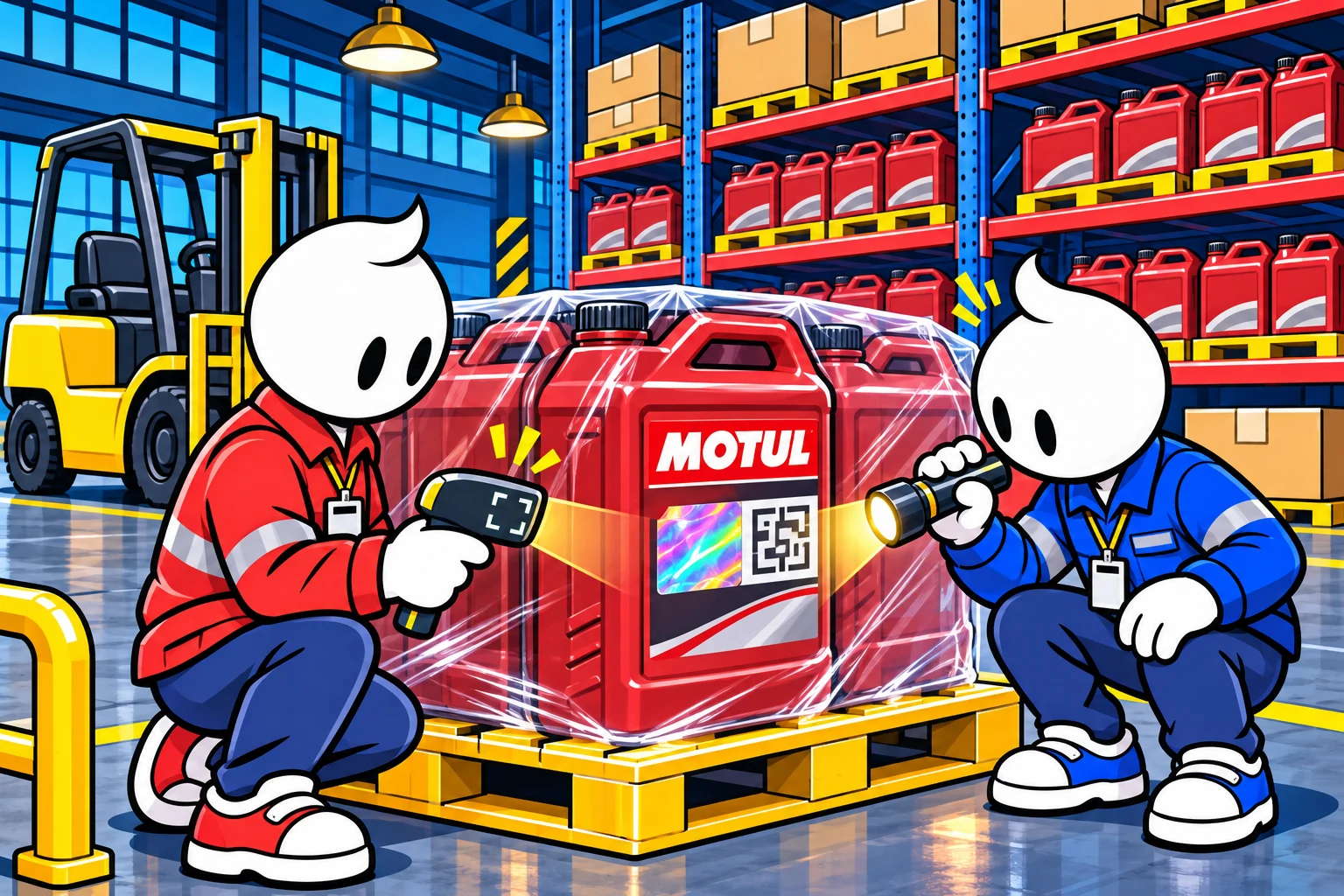
Motul · France / distribution channels · November 19, 2026
Marking for channel control
Corporate system · Not tested
Motul described a November rollout of QR codes and holograms for top-tier products. Scans are intended to connect individual bottles with their journey to distributors and identify suspicious checks. An enhanced Asia-Pacific Track & Trace system had already been announced on October 12: the November release is not the technology’s first appearance.
Our analysis: a signal’s commercial value depends on the next action. The manufacturer needs an owner for suspicious checks; partners need a way to substantiate batch origin and correct errors. Define what happens to goods and settlement while a case is investigated.
Verification scenario. Compare a repeated legitimate scan with a suspicious event: retained information, report routing, checks of batch links and investigation closure. This assesses the complete process for handling a signal.
This is not a third-party service offered for general connection. Counterfeit reduction, implementation cost and false-alert rates are undisclosed. We inspected neither physical bottles nor the system.
Inventory, delivery terms and product identification. Each problem comes with a primary learning resource and our own short exercise. These are editorial selections outside the news window. Historical material is dated; describing a resource does not mean we completed a course or tested an implementation.
An invented editorial scene, not a depiction of an MIT, ICC Academy or GS1 class.
MIT OpenCourseWare · United States · Fall 2009 course · English
Choosing an inventory model
Editorial choice outside the news window · Open notes and problem sets
David Simchi-Levi’s Logistics and Supply Chain Management course provides material on inventory, routing, contracts and coordination. Individual PDFs include Inventory and EOQ Models and an introduction to stochastic inventory and supply contracts. This is a graduate course requiring experience with probability and linear programming.
Our exercise. Start with one item and record what is known about demand, replenishment time, ordering cost and holding cost. Check which assumptions of the selected model match the process. A useful first reading identifies missing inputs before numbers enter the equation.
Foundational material from 2009, not this week’s release or a recommendation to use historical market data. We checked the syllabus and resource list; we did not complete the course or its exercises. Checked November 21, 2026.
ICC Academy · International resource · Incoterms® 2020 · English
Align the seller, buyer and logistics team
Editorial choice outside the news window · Free first lesson after registration
ICC Academy offers the first lesson of its Incoterms® 2020 Certificate programme free after registration. The stated syllabus covers changes in the 2020 edition, seller and buyer duties, risks and costs, and incorporating a chosen rule into a contract. This is an introductory lesson rather than the complete paid certification programme.
Our exercise. Compare one commercial offer with its dispatch instructions. List places where the parties describe handover and costs differently, then prepare questions for agreement. The exercise aims to uncover a gap between departments before the order is executed.
The page gives no original publication date; checked November 21, 2026. We reviewed the public description, neither registered nor completed the lesson. This is a learning-resource selection, not a review of any particular contract.
GS1 · International standard · Version 1.1, September 2023 · English
Product changed. Records updated?
Editorial choice outside the news window · Open standard, not a course
Version 1.1 of the GTIN Management Standard addresses new products and changes to existing ones, including formulation, declared quantity, dimensions, branding and pack quantity. Its rules and examples help assess when a new identifier is needed. This is a GS1 resource, not an application launch.
Our exercise. Choose a planned packaging change and assemble the old and new product records, case specification and customer notice. Establish who updates each record at the manufacturer and the customer. Our exercise connects an identification decision with actual readiness to receive the shipment.
The selected published edition is from 2023; checked November 21, 2026. We reviewed its structure and relevant sections, not a labelling audit. Application in a particular market needs separate verification.
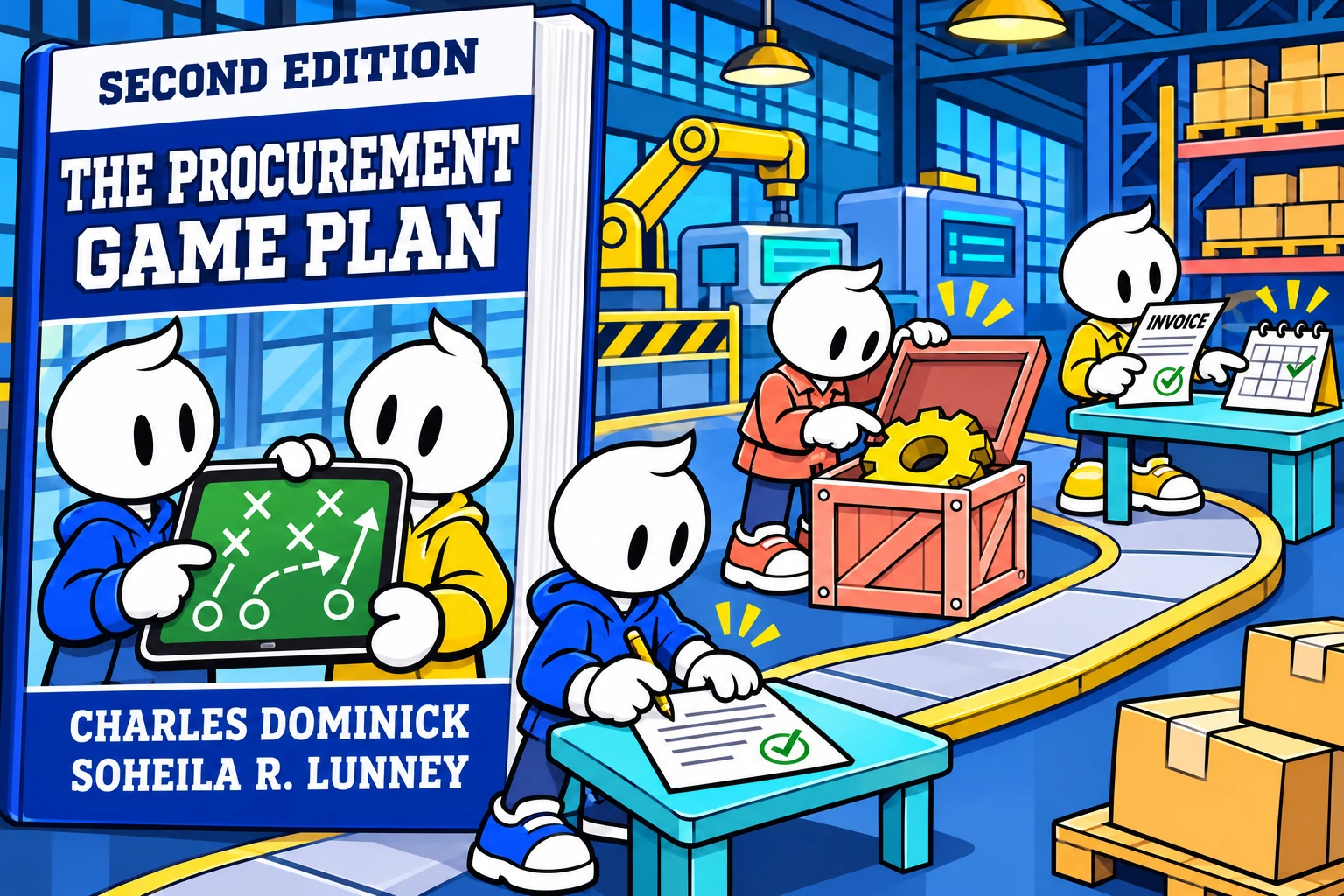
The Procurement Game Plan · Charles Dominick, Soheila R. Lunney · Second edition · J. Ross Publishing · June 2022
What counts as a win for the buyer?
How supplier selection becomes an internal organisational decision, why agreed savings are not yet realised, and where a convenient metric starts shaping commercial terms. A complete editorial analysis from the buyer’s and supplier’s perspectives.
An editorial choice outside the news window. All 16 chapters and Exhibits A–H of the supplied text have been read; coverage and limitations appear at the end of the review.
An editorial illustration inspired by the book cover. The characters and factory scene were created for this section; this is not a photograph of the book or an actual business.
What remains to be checked
When will cash actually arrive?
Seojeon needs shipment and payment milestones; Visa needs the cost and conditions of a completed transaction. Public maximum terms do not replace those records.
What will expressed interest become?
For INLIF, distinguish new orders and advances from non-binding plans. For the graphene project, watch for end-customer qualification results.
Has the customer really returned?
Barfresh’s individual return reports need to be compared with retention and repeat purchases. New export corridors still need a documented first shipment.
The Monday Move
One order, one cash calendar
Take one current order that has already started consuming cash. Bring the commercial commitment, production readiness, proof of delivery and expected receipts into the same discussion.
SalesBring the buyer’s document and the exact terms for changing the order.
Operations and financePut real outflows and expected receipts on a dated calendar; flag missing evidence.
Shared outcomeChoose one missing record, assign an owner and set the next verification date.